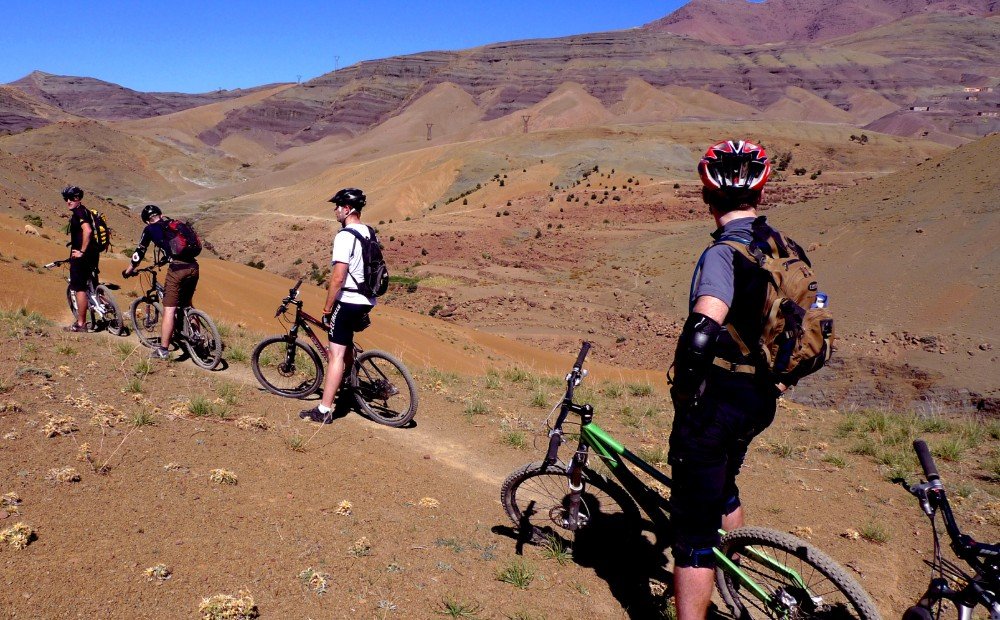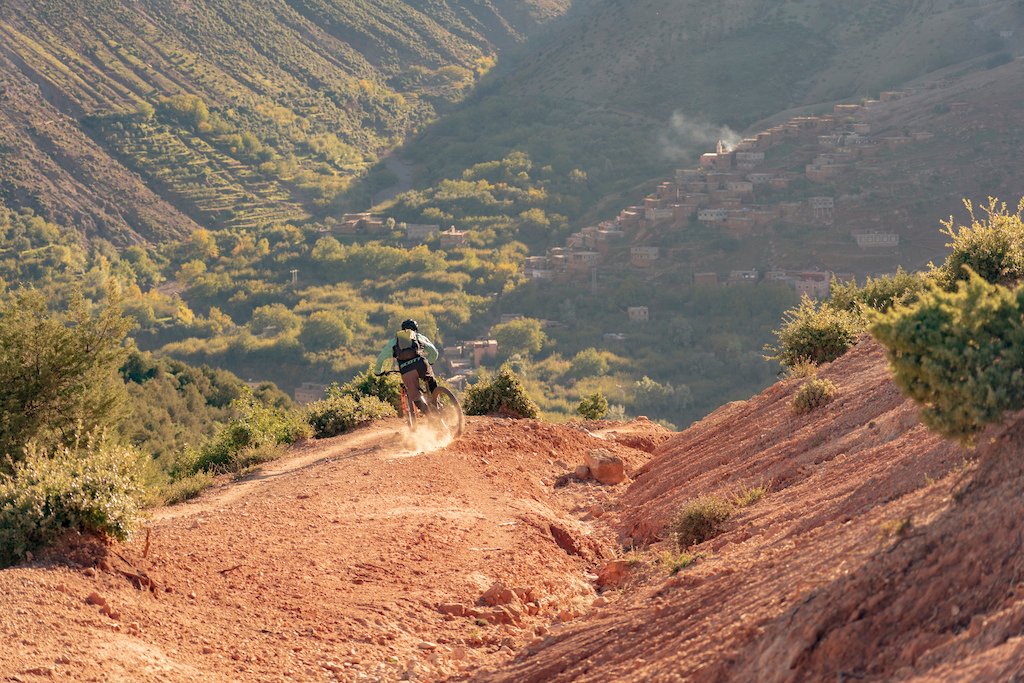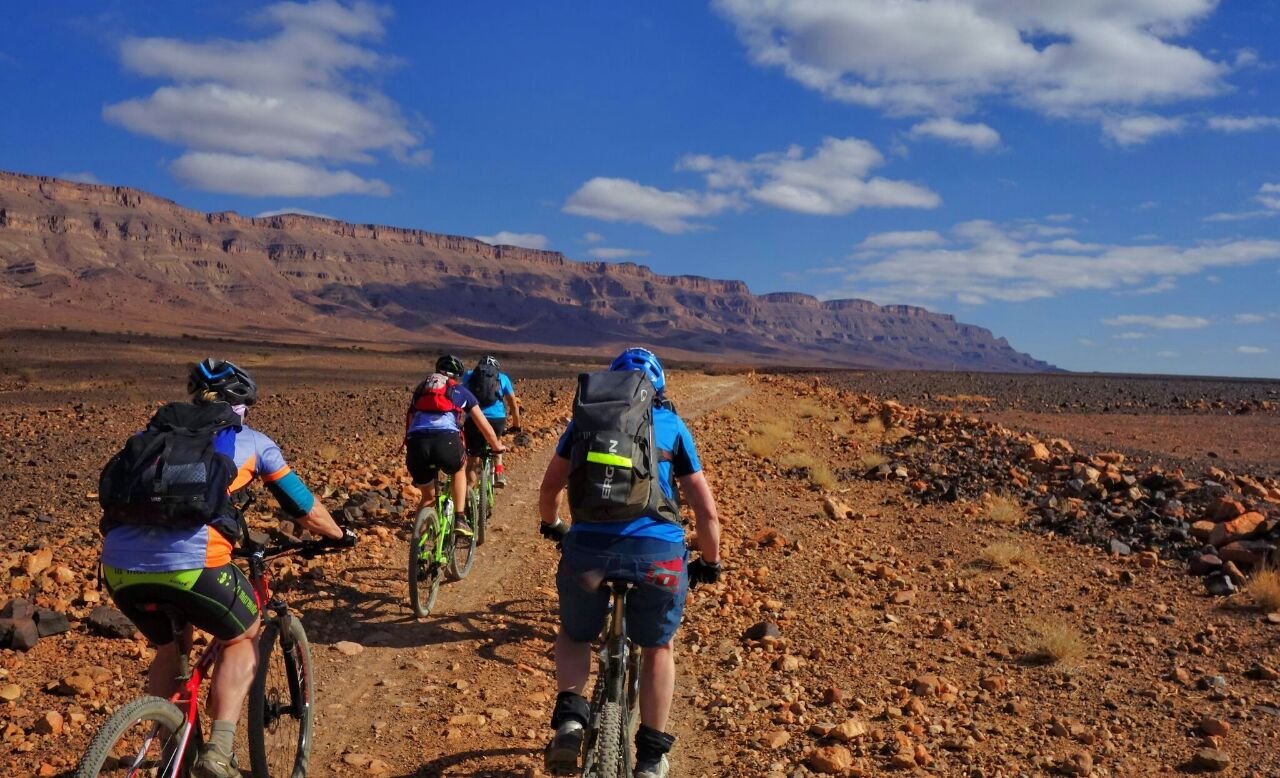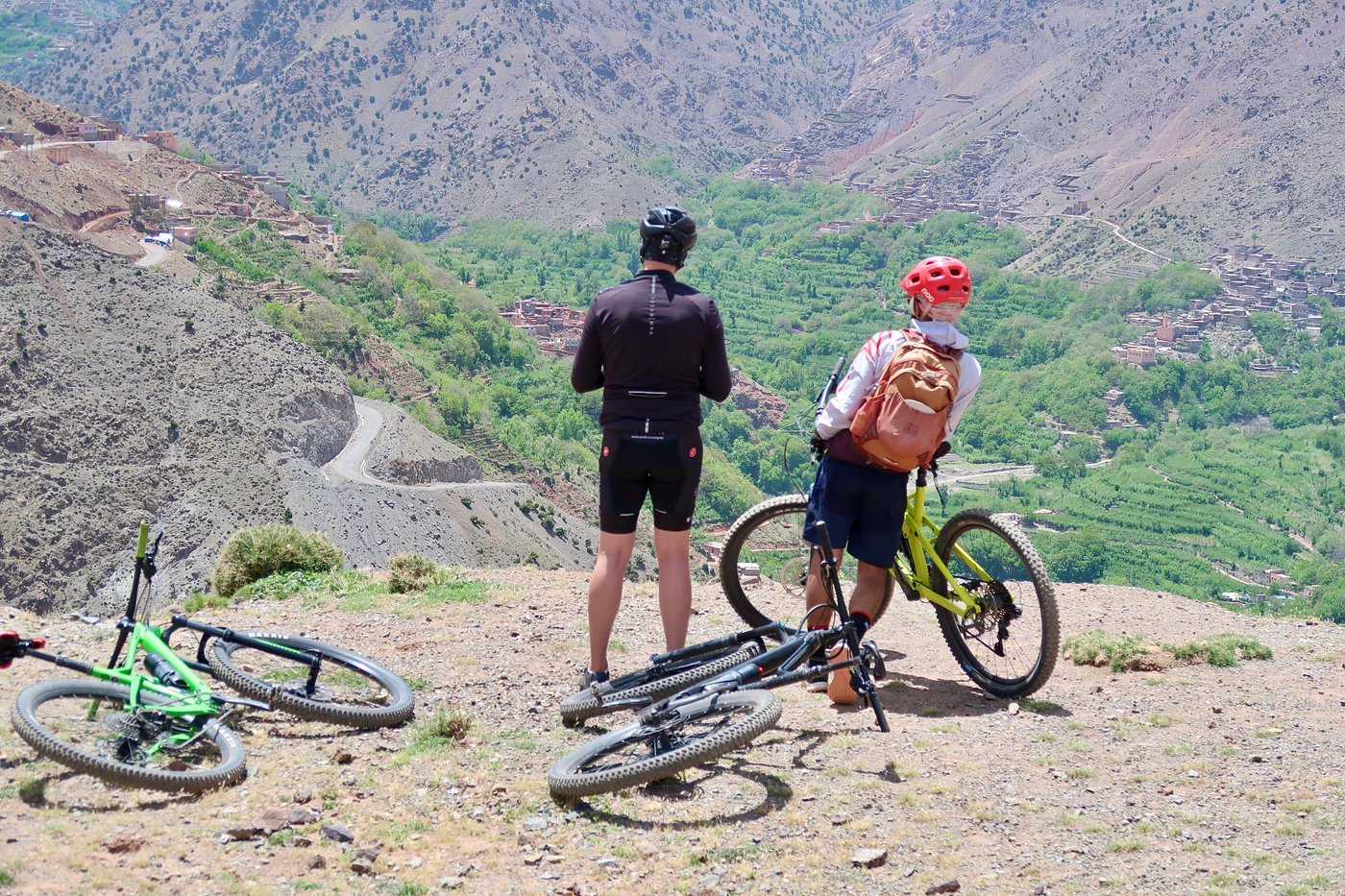
Morocco is not a single mountain-bike destination with one consistent trail style. Terrain changes from valley to valley and from low foothills to high mountain passes. You may encounter rocky ground, compact dirt, old mule tracks, narrow singletrack, rough road connections and long descents. A useful trail guide explains those differences so you can match the route to your ability and the sort of experience you want.
Morocco’s mountain-bike regions at a glance
When researching MTB routes, start with the landscape and the time you have available. The High Atlas is a natural choice for riders who want mountain scenery and varied terrain. Areas around Imlil offer a village-and-valley setting close to the higher mountains. The foothills around Marrakech and the rocky Agafay landscape can suit shorter rides or an introduction to Morocco’s dry terrain, while some southern regions feel more remote and require careful logistical planning.
These are broad descriptions rather than fixed trail ratings. Conditions, access and the character of a route can vary between nearby tracks. Ask for the proposed itinerary, not just the name of a region, and check the exact surface, climbing, technical features and transfer times before you decide.
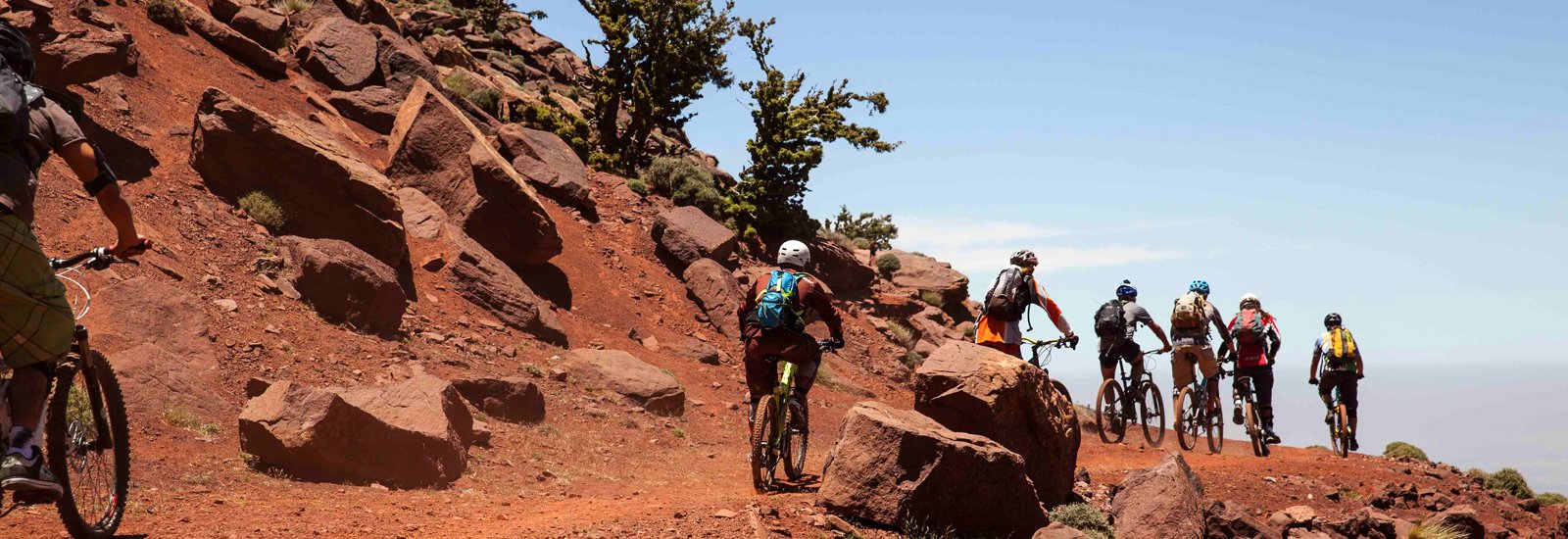
High Atlas: mountain tracks, singletrack and long descents
The High Atlas is known for dramatic elevation changes and a varied mountain environment. Depending on the route, a ride may combine rocky traverses, dirt tracks, narrow trail sections and sustained descents. These can be rewarding for confident riders, but a route’s distance does not tell the whole story: loose stone, steep gradients, exposure and repeated climbs can make a comparatively short stage demanding.
For technical rides, ask about the expected surface, the steepest or most exposed sections, hike-a-bike stretches, and whether the guide will explain challenging features before the group reaches them. Less technical itineraries can still deliver outstanding scenery by using wider tracks and connecting paths. The important thing is that the trail style fits your confidence and leaves enough time to enjoy the journey.
Ask for an honest description of technical difficulty, ascent and surface. A clear route brief is more useful than a broad label such as “easy” or “advanced.”
Explore more in our guide to the best MTB trails in the Atlas Mountains and the technical trails guide.
Imlil and the Mount Toubkal region
Around Imlil and the Toubkal region, routes can pass through mountain villages, terraced slopes and valleys with views of the surrounding high peaks. Access and suitable riding surfaces differ by route. Some sections are more appropriate for road or gravel bikes, while rougher tracks may call for an MTB or an E-MTB built for the conditions. Avoid assuming that every path used by walkers or pack animals is suitable for cycling at speed.
Plan for altitude and variable weather, especially if your ride climbs above the valley. Morning temperatures can differ significantly from afternoon conditions, and wind or recent rain can change comfort and traction. Be ready to adapt the route if the conditions or the group’s energy level make the original plan unsuitable.
For regional context, see Imlil and Mount Toubkal Cycling.
Marrakech foothills and Agafay’s rocky terrain
The landscape outside Marrakech offers a different kind of ride from the higher Atlas. The foothills and Agafay area may include dry tracks, rough rocky surfaces and wide-open views. These routes can work well for a day ride, a warm-up before a longer holiday or a mixed itinerary that combines time in the city with cycling in the surrounding countryside.
Exposure to sun and wind can make these rides feel more demanding than the distance suggests. Carry enough water for the planned stage, check start and finish points, and agree on a plan for transfers and mechanical problems. During hotter periods, ask whether the start time or route should be adjusted to avoid the warmest part of the day.
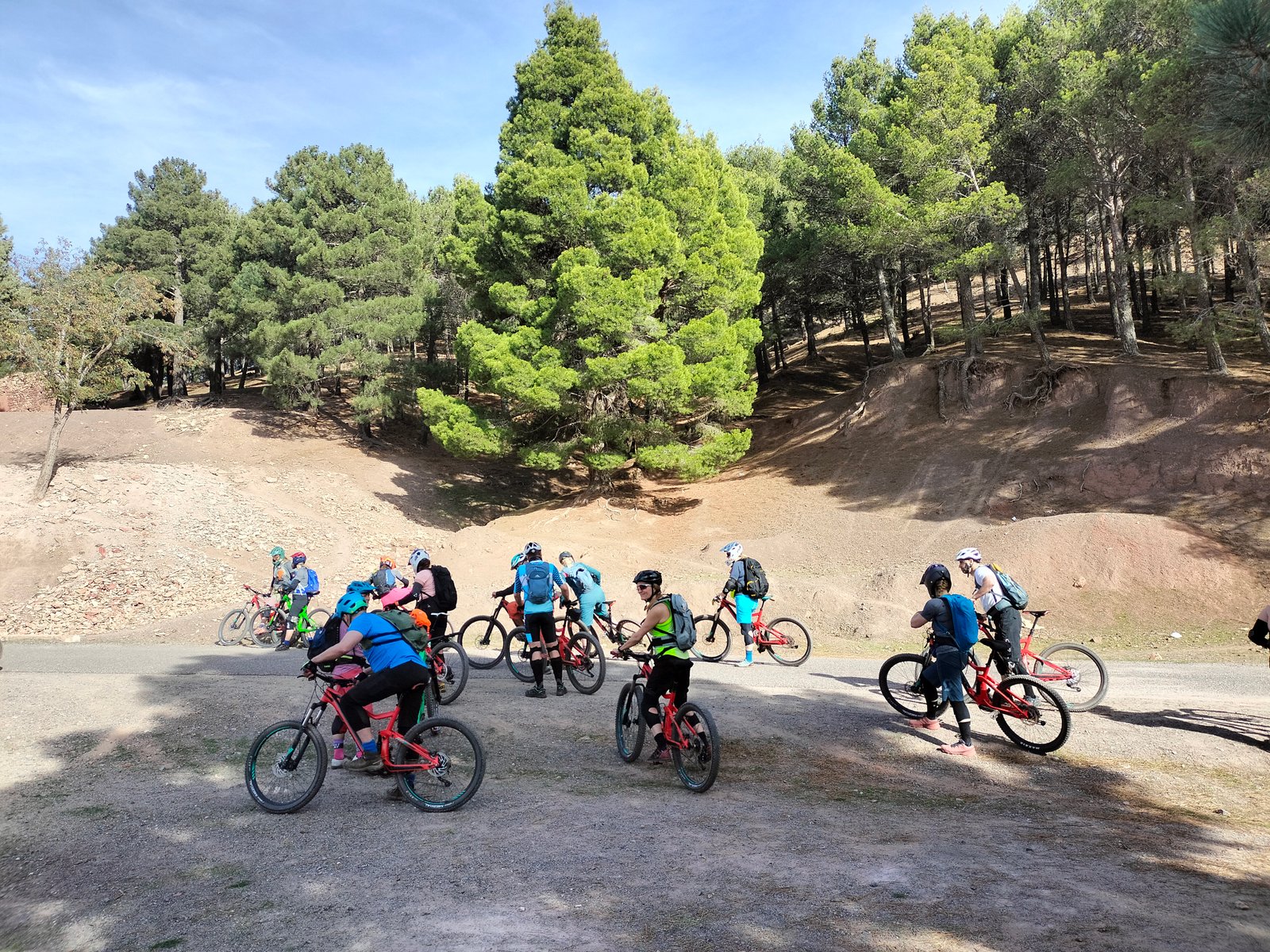
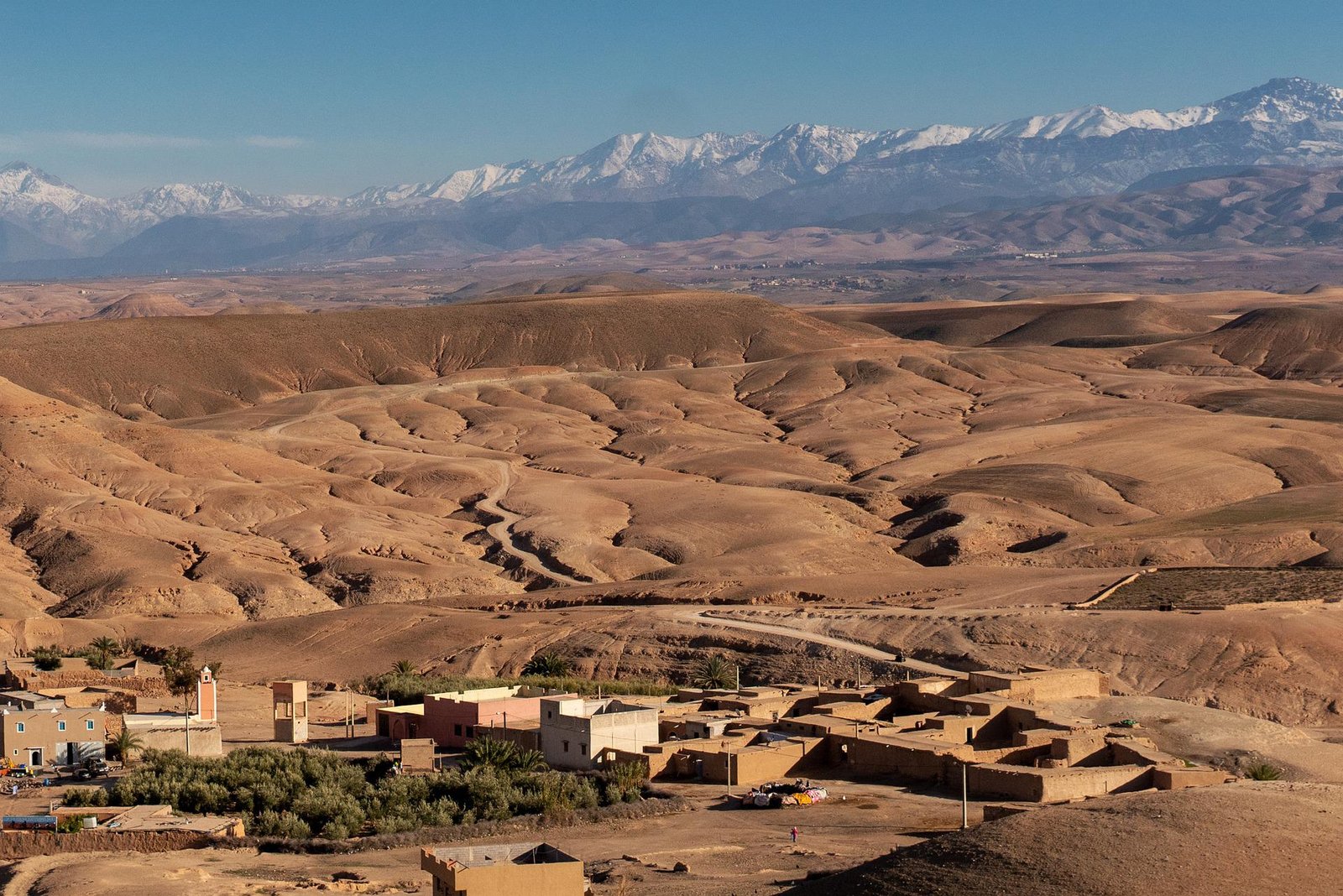
Southern Morocco and remote-feeling routes
Further south, some routes offer wide landscapes, rocky tracks and long distances between services. They can be attractive for experienced riders who enjoy a sense of expedition, but the support plan is especially important. Check where water and food will be available, how luggage is moved, where the ride finishes each day and what happens if weather or a mechanical issue interrupts the stage.
Mountain biking and gravel may be better suited than a narrow-tyred setup on rough surfaces, but the exact bike choice depends on the route. For remote regions such as Jbel Saghro, review the Jbel Saghro cycling guide before finalising a plan.
Choose a trail that fits your riding level
Beginner and intermediate riders
Look for routes with a clear surface description, manageable climbing and enough time for breaks. A wider track may be a better fit than narrow technical singletrack, even when both offer mountain views. Being new to mountain biking does not mean you must avoid adventure; it means the route should be selected honestly around current skills and comfort.
Confident and advanced riders
If you enjoy technical descents, loose rock and narrow lines, ask for specific information about the trail’s character and exposure. Check that the route is suitable for your bike, that your group shares a compatible skill level, and that support arrangements make sense for the remoteness of the ride. More difficult is not automatically better if the route becomes stressful or unsafe.
Groups with mixed abilities
Plan around the least experienced rider and discuss alternatives before the trip. A good itinerary can sometimes include separate route options or regrouping points, but this needs to be coordinated with guides and any support vehicle in advance. Make sure everyone understands the daily distance, terrain and pace expectation.
Equipment and preparation
Use a bike that is appropriate for the roughest surface on your planned route. Check brakes, tyres, drivetrain, suspension if fitted, and the condition of wheels before the ride. For hired bikes, confirm frame size, pedals, helmet availability and the equipment included. Carry personal essentials and clarify which tools, spare parts and mechanical assistance are provided by the organiser.
A correctly fitted helmet, gloves, eye protection, suitable shoes and layered riding clothes are useful starting points. Sun protection and sufficient water capacity are important on exposed terrain. Depending on the season and elevation, a windproof or waterproof layer and warmer clothing may also be needed. For multi-day trips, confirm luggage limits, bike transport, accommodation, meal arrangements and whether charging is available if you are using an E-MTB.
- Bike fit: Confirm frame size, saddle position, controls, pedals and tyre choice.
- Route brief: Know the surface, distance, ascent, start and finish points and expected duration.
- Water and food: Check refill points and carry enough for the most remote stretch.
- Support: Confirm guide, transfers, luggage handling and mechanical contingency plans.
- Weather: Review conditions for the actual route and elevation close to departure.
When is the best time to ride?
The best season depends on the region and the route. Spring and autumn are often considered for many lower and mid-altitude rides, but high mountain routes can be cold or affected by snow and lower, exposed landscapes can be very hot in summer. Road and coastal routes have different considerations, including wind and traffic. Check current conditions and local access for the dates you plan to travel.
Leave flexibility in the schedule if your itinerary crosses different elevations or remote areas. An alternative route, earlier start or rest day may be sensible if weather or trail conditions change. Treat this article as planning guidance rather than a live report of current trail conditions.
Responsible mountain biking in Morocco
Many trails and tracks are part of everyday life for local residents, walkers and animals. Reduce speed near homes, give pedestrians plenty of space, follow agreed routes and avoid creating shortcuts that damage the path. Ask permission before photographing people, take rubbish with you and support local businesses respectfully when making stops. A thoughtful approach helps protect the landscapes and community relationships that make a cycling holiday meaningful.
Questions to ask before booking
- What is the day-by-day distance, climbing and expected riding time?
- Which surfaces and technical features should riders expect?
- What guide, vehicle, luggage and mechanical support is included?
- Are bikes, helmets, pedals and spare parts supplied or hired separately?
- What are the water, food, accommodation and transfer arrangements?
- How can the itinerary be adapted if conditions change or a rider needs a different pace?
Compare tours by the full riding experience rather than headline mileage alone. A well-planned itinerary should explain what is included, what you need to bring, and how the route fits your group’s experience and dates.
Frequently asked questions
Where are the best mountain-bike trails in Morocco?
There is no single best region for every rider. The High Atlas and Imlil area offer varied mountain terrain; the Marrakech and Agafay foothills can suit shorter rides on rocky tracks; and some southern regions offer rugged, remote-feeling routes. The best choice depends on your experience, dates, preferred surfaces and the support available for the planned route.
Are Morocco MTB trails suitable for beginners?
Some routes may be appropriate for riders with basic bike control and confidence on uneven surfaces, while steep, rocky or narrow trails require more experience. Ask for a clear description of technical features, climbing, surface and any exposed sections. Choose a route that suits the least experienced member of the group.
Is a full-suspension mountain bike necessary?
The best bike depends on the route and your comfort. Rough, rocky or technical trails may be more comfortable on a capable mountain bike with reliable brakes and suitable tyres. Smoother tracks may allow other setups. Confirm the expected terrain, bike availability, sizes and included equipment before booking.
When is the best time to go mountain biking in Morocco?
Conditions differ by region and altitude. Spring and autumn are often useful periods to consider for many lower and mid-altitude routes, but high mountain areas can be cold or affected by snow and lower terrain can be very hot in summer. Check current conditions for your exact route and dates.
Can I combine different MTB regions on one trip?
Yes, a multi-day itinerary may combine regions, but transfer time, daily riding effort, rest and accommodation all need to be considered. Avoid packing too many distant regions into a short holiday. Ask for a day-by-day outline showing riding time and transfers.
What should I check before booking an MTB tour?
Confirm the route, daily distance and ascent, surface, technical difficulty, guide and support arrangements, equipment, transfers, water stops, accommodation and what is included in the price. Also ask how the plan may change if weather or trail access makes the original route unsuitable.