The Atlas Mountains are not one continuous trail with a single difficulty rating. Routes change with elevation, valley, surface and local conditions. One day may combine rocky traverses, compact dirt and old paths between settlements; another may focus on narrow singletrack or a long descent. Planning around the actual trail character is more useful than relying on distance alone.
Understanding High Atlas mountain-bike terrain
The High Atlas landscape includes steep-sided valleys, terraced slopes, high viewpoints, rural tracks and rocky ground. That variety is a big part of the appeal, but it also means that a route's headline distance only tells part of the story. A shorter ride with loose stone, tight turns and sustained climbing can feel more demanding than a longer day on smoother tracks.
When comparing rides, look for a description of surface and difficulty as well as kilometres. Ask how much climbing is involved, whether the descent is continuous or broken into sections, whether there are exposed edges, and whether any steep or rough stretches may require you to walk the bike. These details help you choose a route that feels rewarding instead of stressful.
1. Singletrack and technical mountain trails
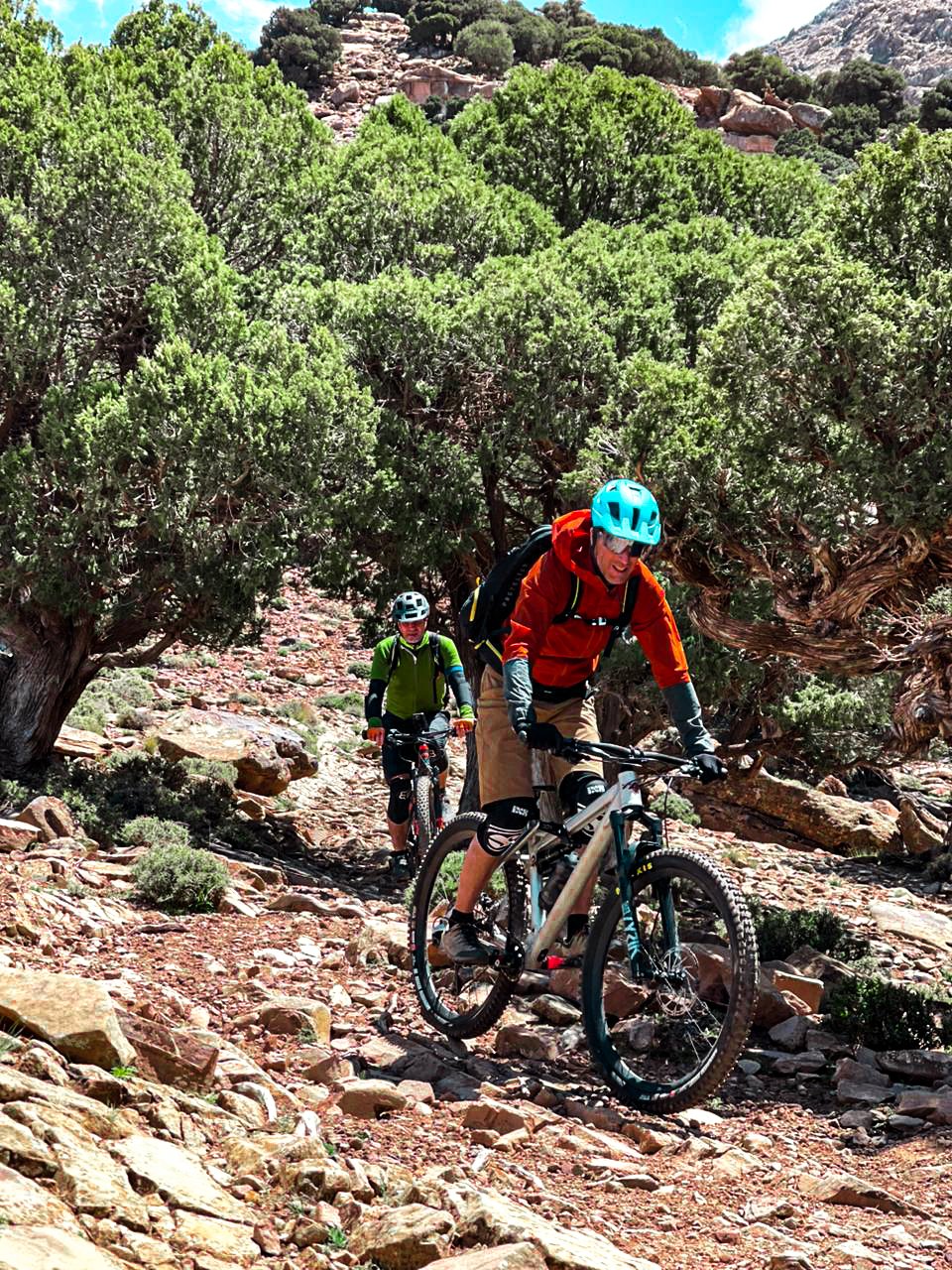
Narrow singletrack can be a highlight for experienced riders who enjoy precise line choice, controlled braking and changing terrain. The trail may be rocky, uneven or winding, with tight turns that reward looking ahead and staying relaxed on the bike. Some sections may be smooth and flowing; others can demand slower, more deliberate riding.
Technical trails are not automatically the best choice for every rider. Be honest about your comfort on loose surfaces, your ability to manage steep gradients and your experience on narrow paths. A local guide can explain the main features before a section begins and help a group choose appropriate alternatives when the terrain is beyond someone's ability or the conditions are unsuitable.
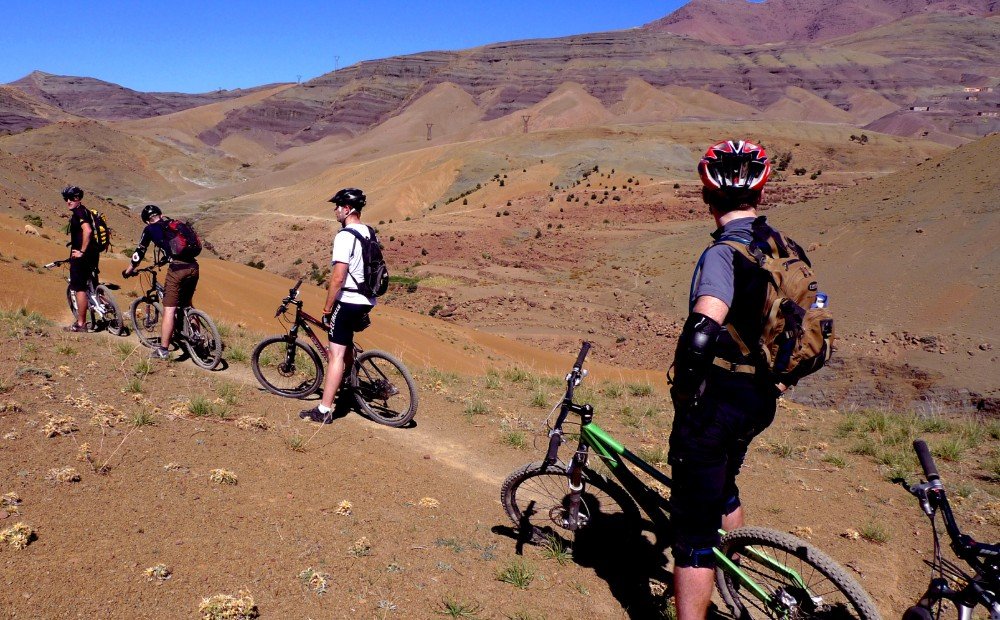
Ask whether technical sections have safe places to stop and regroup. A good route plan gives riders time to assess a feature before attempting it.
2. Village paths, mule tracks and wider mountain routes
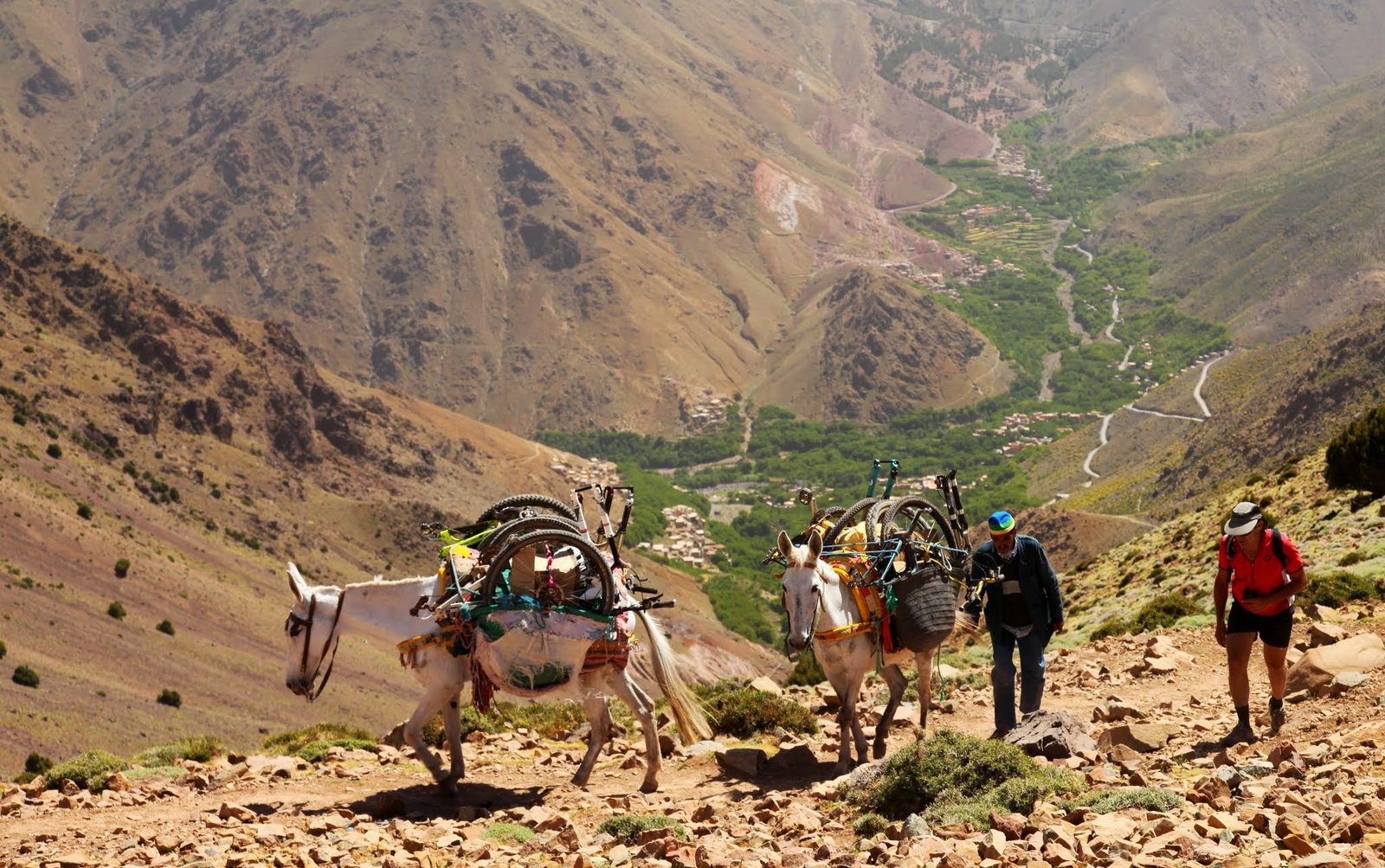
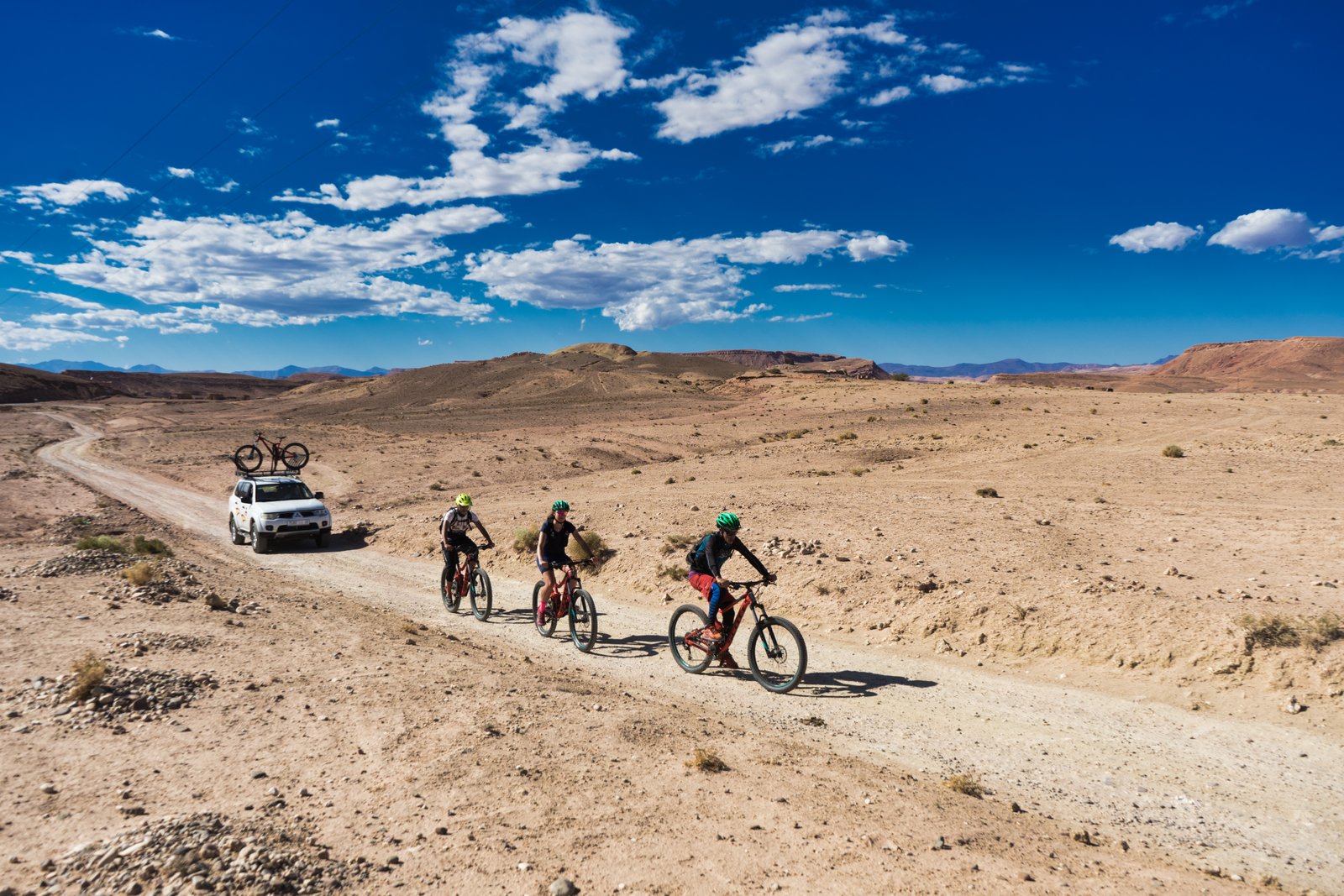
Not every memorable ride needs to be a difficult singletrack challenge. Wider dirt routes and established paths can link valleys, rural settlements and mountain viewpoints. They can be a better fit for mixed-ability groups or riders who want to balance time on the bike with pauses to appreciate the landscape and local life.
Paths may also be part of everyday village access, used by walkers, residents and animals. Slow down near homes, give people plenty of space and follow your guide's direction about where to pass. These are shared routes, not closed cycling circuits, so courtesy is an important part of a good day out.
3. Long descents and changing mountain surfaces
A route with a rewarding descent can still require fitness and concentration. Riders may climb for a long period before descending over loose rock, hard-packed dirt or broken ground. Fatigue can affect judgement, especially late in the day, so pacing and food and water breaks matter as much as technical skill.
Before setting off, ask what the descent involves and whether the group will be supported by a guide or vehicle. Confirm where the ride starts and finishes, how transfers work, and what happens if someone is tired or a bike develops a mechanical issue. The precise arrangements vary by trip and should be confirmed with the organiser.
How to choose the right Atlas MTB route
Use these questions to compare options before you book:
- Technical confidence: Are you comfortable with loose rocks, narrow paths, steep turns and changing grip?
- Fitness and climbing: What daily distance and elevation can the whole group enjoy consistently?
- Surface: Will the route use singletrack, wider dirt tracks, paved connections or a mixture?
- Altitude and weather: What conditions are expected for the planned dates and elevation?
- Support: What guiding, mechanical help, transfers, water stops and luggage arrangements are included?
- Group fit: Can the route be adapted to the least experienced rider without putting anyone under pressure?
A good trip description should make these things clear. If the details are not available yet, ask before confirming the booking. The most enjoyable itinerary is usually one that balances challenge, scenery, time to recover and enough flexibility to respond to conditions.
How to prepare for a High Atlas mountain-bike ride
Arrive with a bike that is appropriately sized and mechanically sound. Check the brakes, tyres, drivetrain and suspension setup before the ride, and make sure you know how to use the bike's controls. If you are hiring equipment, confirm the available sizes and what is included—especially helmet, pedals, repair tools and spare parts.
Bring a correctly fitted helmet, gloves, eye protection, comfortable riding clothing, suitable shoes and enough water capacity for the route. Depending on season and altitude, a warm layer and a lightweight wind or rain layer may be useful. Ask the organiser what snacks, water, tools and emergency supplies are provided so you can pack sensibly rather than assume all tours carry the same equipment.
You do not need to train for a race to enjoy a mountain-bike holiday, but regular rides that include climbing and uneven surfaces will help you feel more comfortable. Practise smooth braking, choosing a line and riding at a controlled speed on terrain similar to what you expect. If the trip is multi-day, build consistency and recovery into your preparation, not just maximum effort.
Ride responsibly through the mountains
Respect for local communities and the landscape should shape every ride. Give way to pedestrians and animals, reduce speed when passing homes, follow the route agreed with your guide and avoid creating shortcuts that widen or damage paths. Close gates if you have been asked to do so, take rubbish with you and ask before photographing people.
Conditions, access and trail surfaces can change, and this guide is not a live trail report. Check the current situation for your planned route, listen to local guidance and be willing to adjust the day if weather, visibility or trail conditions make the original plan unsuitable.
Make the trail fit the adventure you want
The best MTB trail in the Atlas is not necessarily the steepest or most technical. It is the route that matches your confidence and fitness, gives you the right amount of challenge, and leaves room to enjoy the mountains and the communities along the way. Start with your experience and travel dates, then build the itinerary around realistic riding days and support arrangements.
If you are deciding between a single guided ride and a longer mountain-bike holiday, explore the available options and ask for details about trail surface, climbing, difficulty and equipment before making a decision.
Frequently asked questions
Are the Atlas Mountains trails suitable for beginners?
Some routes may suit newer mountain bikers who have basic bike control and are comfortable riding on uneven surfaces. Narrow, rocky or steep trails can demand more experience. Share your recent riding experience with the trip planner so the route can be matched to your group rather than choosing by scenery alone.
Do all High Atlas routes use singletrack?
No. Depending on the area and itinerary, a ride can include village paths, wider dirt tracks, rocky traverses, road connections and singletrack. Ask for a route description that explains the surface, technical sections, elevation gain and any places where riders may need to walk the bike.
What should I check before booking an MTB route?
Confirm approximate distance and climbing, technical difficulty, expected surface, transfer time, guide and support arrangements, bike availability, included equipment and the plan for changing conditions. Ask whether the route is suitable for the least experienced rider in your group.
What is the best time of year to ride?
Conditions depend on altitude, location and the type of trail. Spring and autumn can be comfortable for many lower and mid-altitude rides, while high areas may be cold or affected by snow and lower terrain can be hot in summer. Check conditions for your exact route and travel dates before confirming plans.