The most enjoyable family cycling itinerary is paced around the youngest or least-experienced rider, not the strongest adult. Shorter stages, clear stopping points, safe transitions between riding sections and time away from the bike can turn a challenging holiday into a shared adventure. Plan the ride for the people in your family rather than trying to fit your family into a standard adult itinerary.
Plan around the whole family
Start with an honest picture of each rider's experience. Consider who is confident on paved roads, who has ridden on dirt, who enjoys hills and who may need extra time on descents or loose surfaces. A child who cycles confidently in a park may still need practice with gravel, traffic, uneven ground or longer days in the saddle.
Agree on the main goal of the holiday. Some families want easy scenic rides with time for picnics and village stops; others may have teenagers eager for mountain trails. The right plan can include different types of days, but transitions and support need to be discussed in advance. Build in flexibility so that the family can shorten a stage or take a rest without feeling that the trip has failed.
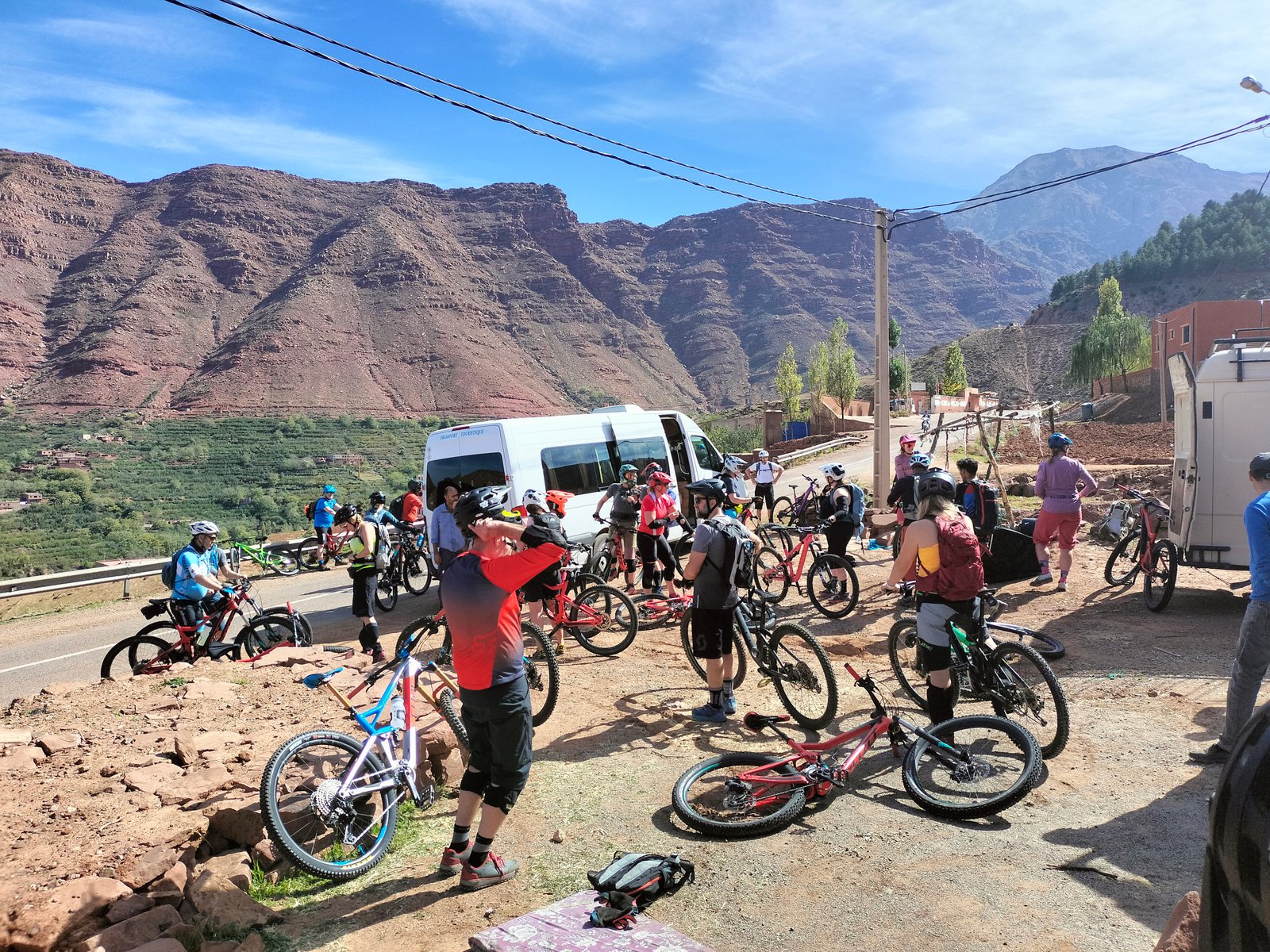
When estimating daily distance, climbing and technical difficulty, use the needs of the youngest or least-confident cyclist as the starting point. Stronger riders can enjoy extra activities while the group stays together for key moments.
Choose a region that suits your family
Marrakech and the surrounding countryside
Marrakech can be a practical base for shorter rides and day trips, with the option to combine cycling with markets, gardens, food and cultural visits. The best routes usually start away from the busiest traffic and use a suitable mix of quieter roads or tracks. Ask about transfer time, traffic exposure and whether the route has easy places to stop or return early if needed.
Atlas foothills and mountain valleys
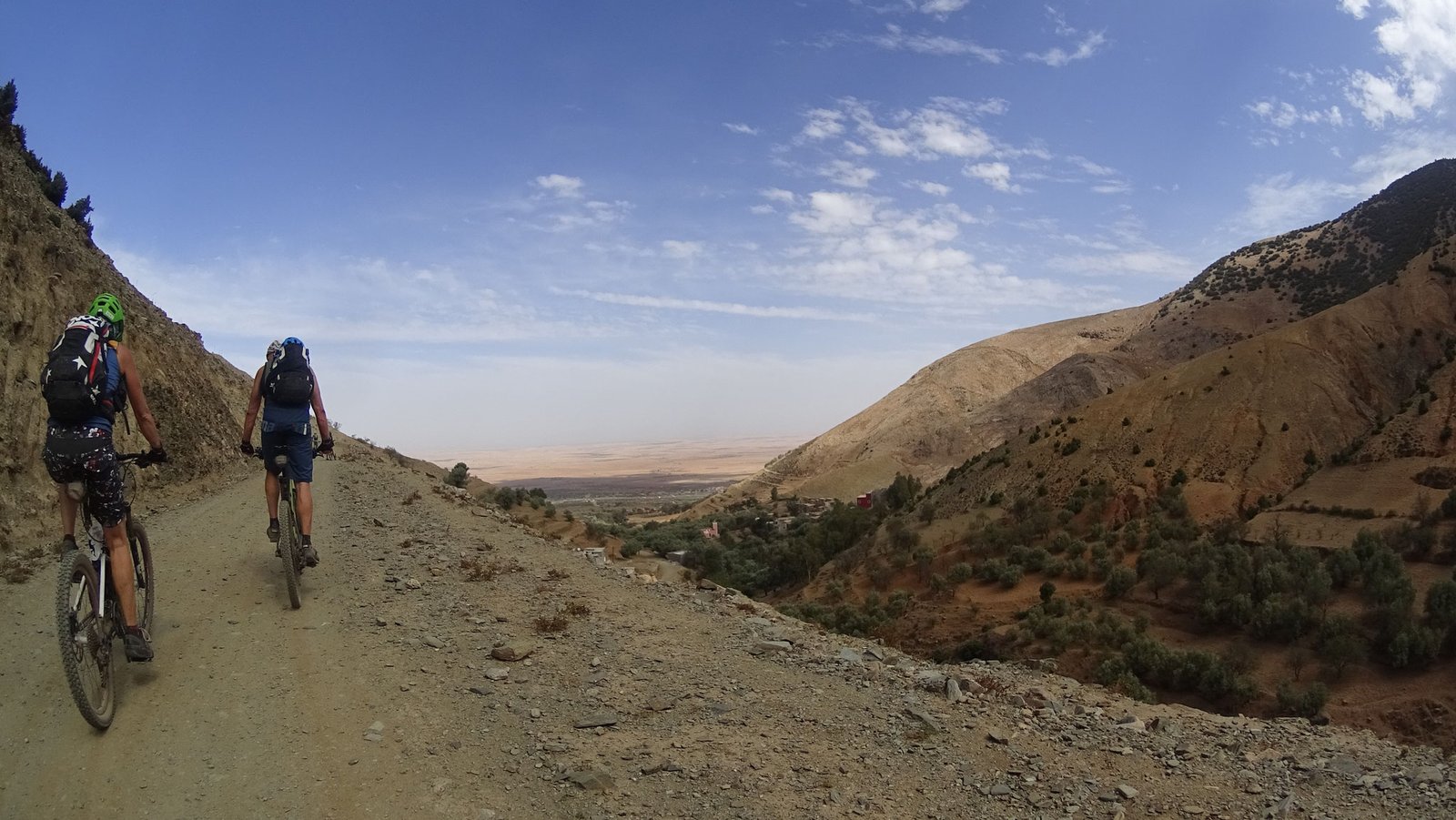
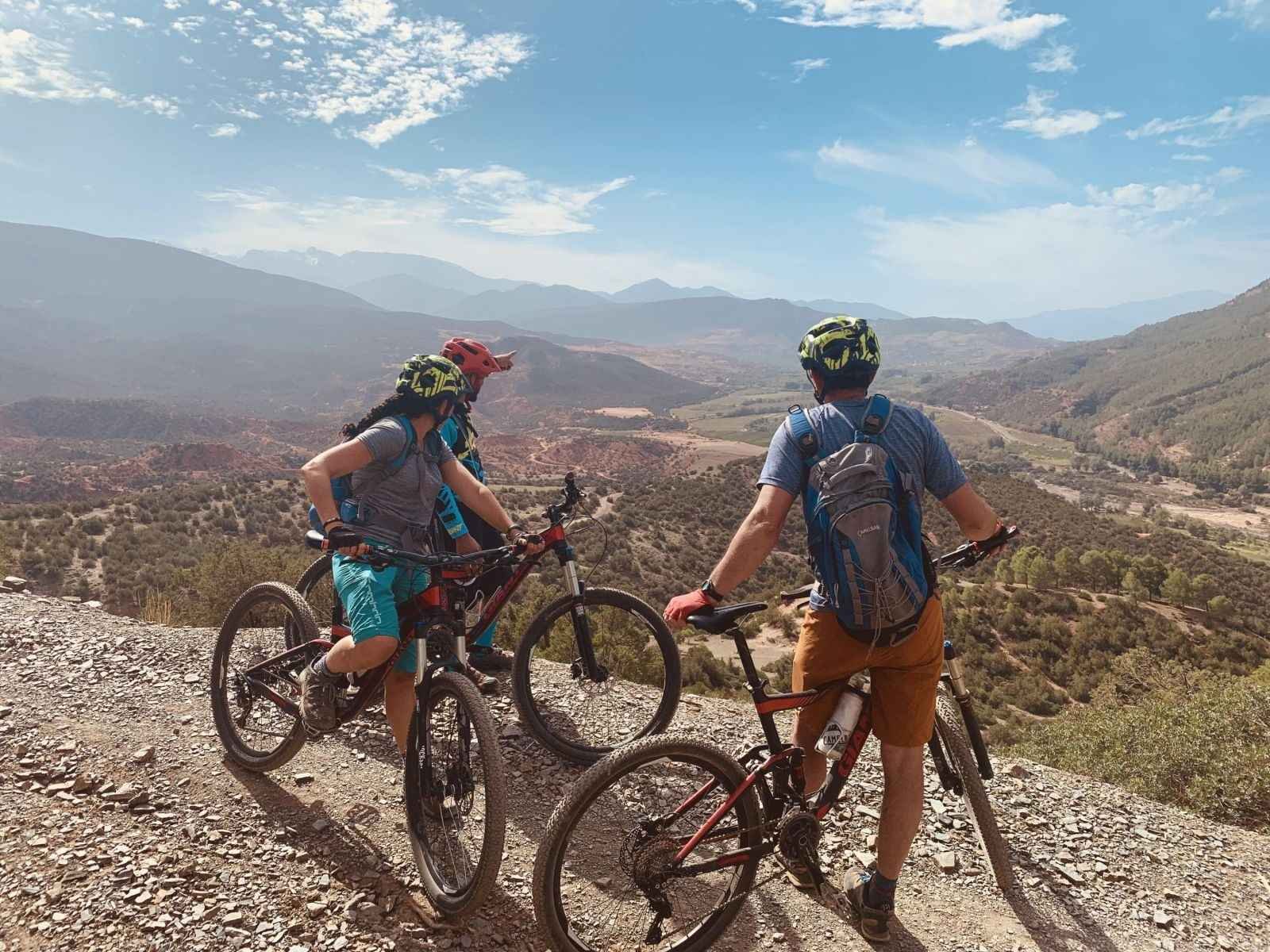
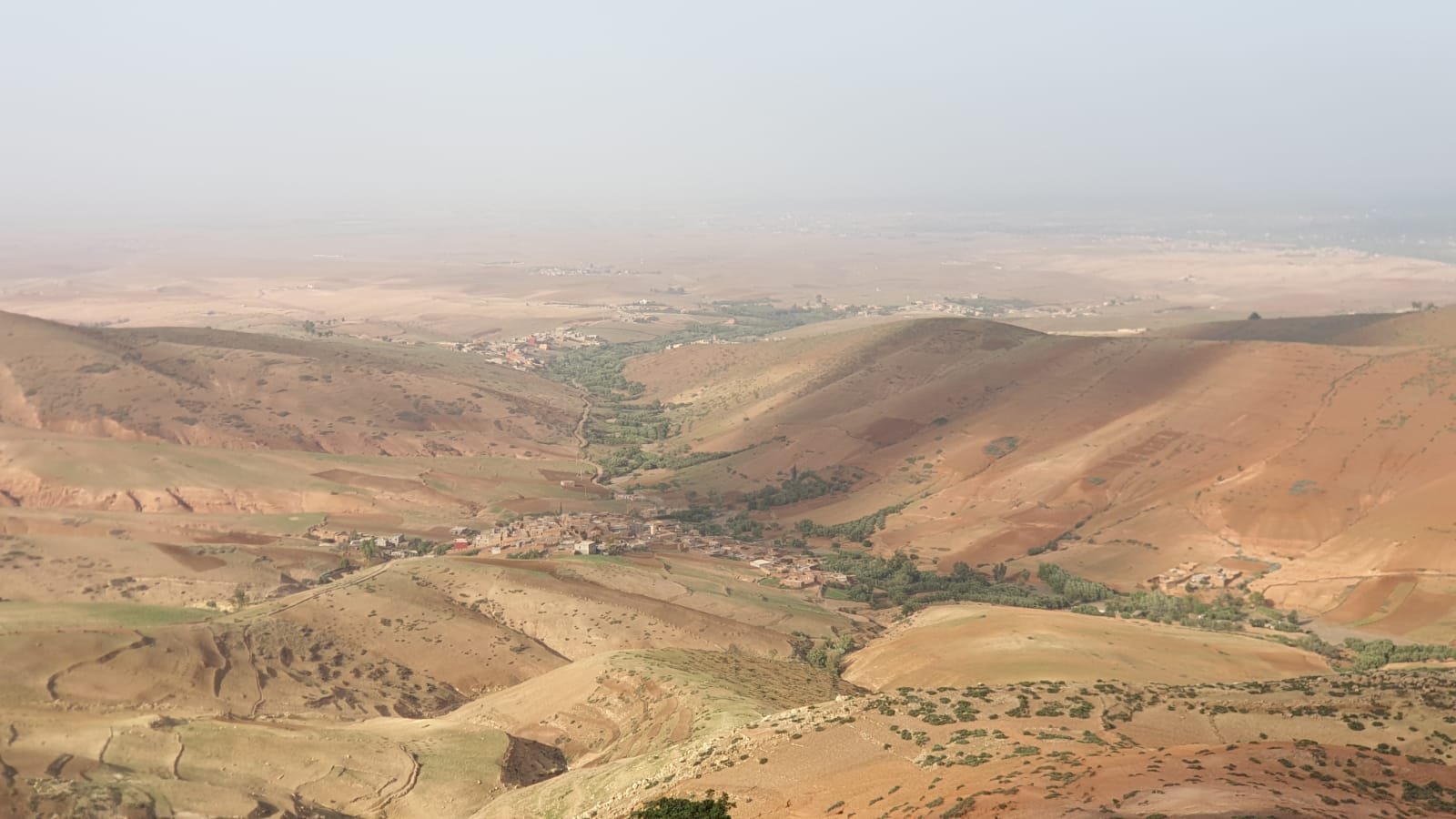
Rural valleys offer scenery and the opportunity to experience mountain villages, but elevation and surface can make a route harder than it appears. Choose routes with manageable climbs, suitable stopping points and an appropriate surface for the bikes available. High or exposed trails may not suit young riders, particularly if the weather is cold, wet or windy.
Agafay and open landscapes
The rocky terrain around Agafay can be striking, but exposed routes may have little shade and loose or uneven surfaces. For a family ride, discuss temperature, water capacity, surface, route length and an early-return option. Do not assume every desert-style excursion is suitable for children just because it is described as a day trip.
For more route ideas, explore our Best Cycling Routes From Marrakech guide and the Complete High Atlas Mountains Cycling Guide.
Choose suitable bikes and routes
Road cycling on paved routes
A road-based family ride can work when the chosen roads have suitable traffic levels, visibility and safe places to regroup. Confirm junctions, road shoulder or verge conditions where relevant, and how the group will be supported. For younger riders or those new to road cycling, avoid assuming that a long distance on smooth pavement will automatically be easy.
Gravel cycling on manageable tracks
Gravel can offer a quiet way to explore rural areas, but the term covers many surfaces. Compact dirt is different from deep gravel, loose stones or steep rutted tracks. Ask for details of the roughest section and match tyre width, gearing and braking to the route. If riders have different bikes, choose a surface that works for everyone.
Mountain biking and E-MTB
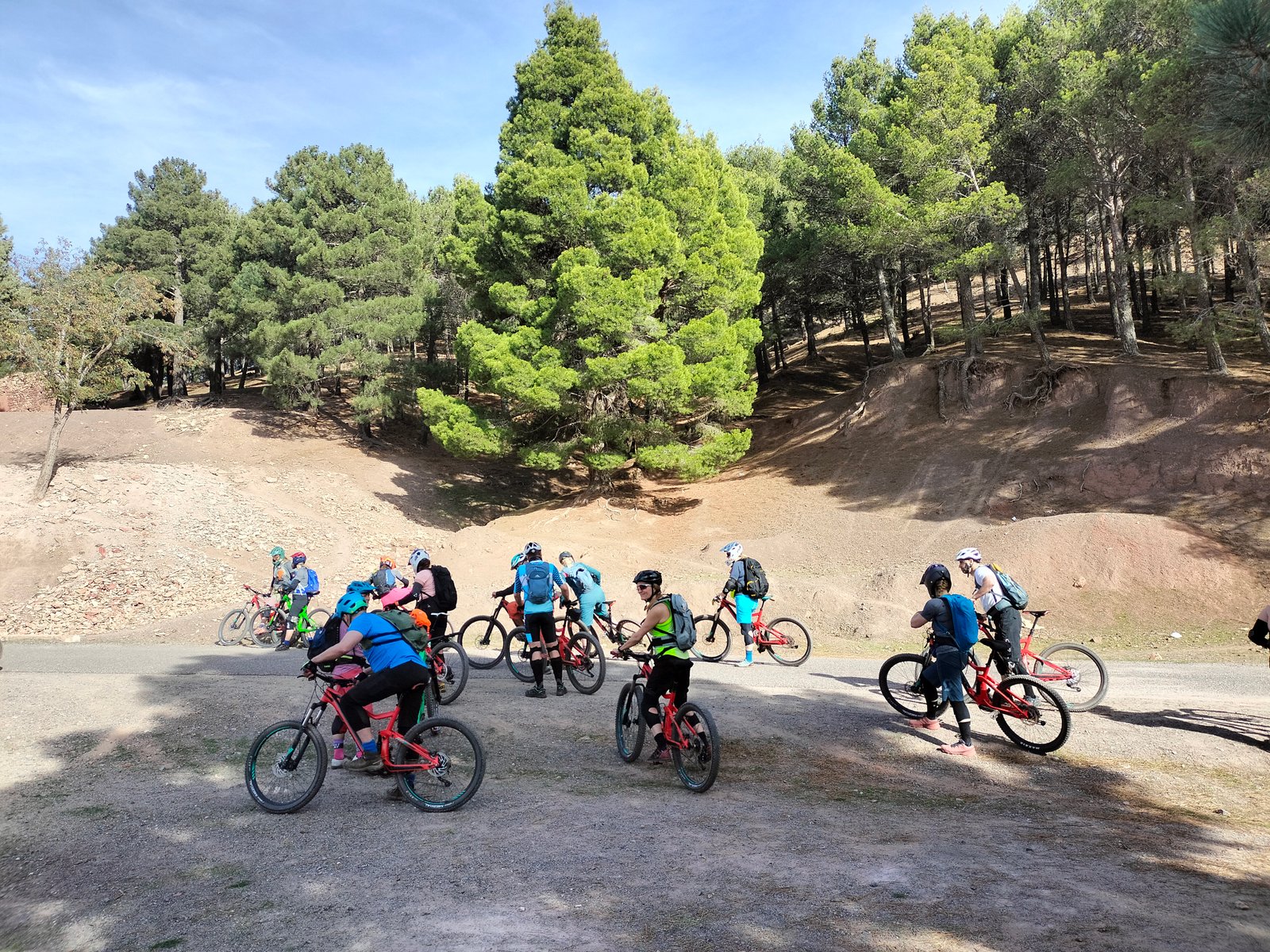
MTB can suit families with confident off-road riders, provided the trail difficulty matches their skills. Technical descents, exposure, sharp drop-offs or long hike-a-bike sections may not be appropriate. E-MTB can help some adults manage climbs, but battery range, charging and bike weight still matter, and assistance does not replace handling skills. Confirm suitable bike sizes and safe setups for every rider.
Request daily distance, ascent, surface types, traffic exposure, technical features, rest stops and the plan for returning early. A clear route description is more useful than a general label such as “easy family ride.”
Keep daily distance, breaks and pace realistic
There is no universal number of kilometres that works for every family. Terrain, temperature, climbing, bike fit, confidence and the time needed for food and stops all affect the day. A short route can feel demanding on loose surfaces or in heat, while a longer ride on gentle terrain may be comfortable for experienced young riders.
Build regular breaks into the plan and identify places where the group can safely stop. Carry enough water for the actual route, plus snacks that suit the riders. Start early when conditions make that sensible, but do not pack the schedule so tightly that a slow section or an unexpected stop creates pressure. Leave room for spontaneous discoveries, photos and time to enjoy the destination.
- Agree on a comfortable riding time as well as a distance.
- Plan frequent breaks and identify food and water stops.
- Allow extra time for climbs, loose surfaces and young riders learning new skills.
- Discuss a shorter alternative or early-return plan before setting off.
Safety, guiding and support for families
Safety planning starts with route selection. Ask how the guide assesses the surface, traffic, technical sections and weather, and how the group will be managed if riders become separated or someone needs to stop. Children should understand basic group signals, how to follow instructions and what to do if they have a problem with a bike or feel unwell.
Confirm helmet availability and fit, bike condition, brake performance, suitable saddle and handlebar setup, and whether tools or spares are carried. For longer routes, ask whether a support vehicle is available, what it can carry and how it can reach the planned riding areas. Do not assume a vehicle can follow every narrow track or remote path.
Make the family's comfort part of the plan. Encourage children to say when they are tired, cold, hot or worried about a section. A responsible itinerary should allow the guide and adults to adjust the route, walk an unsuitable part or stop when conditions call for it.
Accommodation, meals and activities beyond the bike
A family holiday is more than riding time. Check whether the accommodation suits your family size, sleeping arrangements and preferred comfort level, and confirm meal options and timing around the riding day. Useful questions include whether there is space to store bikes, how luggage moves between stops and what happens if the family wants a rest day.
Consider adding non-riding activities such as exploring Marrakech, spending time in a village with a local host, visiting a market or enjoying a relaxed afternoon at your accommodation. These breaks can help younger travellers recover and give everyone a different way to connect with the places they visit. Confirm which activities are included and which need separate arrangements.
Choose the season and pack thoughtfully
Conditions vary between the city, mountain valleys and open desert terrain. A comfortable season for one region may bring chilly mornings at altitude or warmer, exposed riding elsewhere. Check the expected weather for the exact route and dates, and leave flexibility if your plan includes multiple elevations. Seasonal guidance is useful, but it is not a live forecast.
Pack well-fitting helmets, gloves, suitable shoes, cycling clothing, sunglasses or protective eyewear, sun protection, water bottles or hydration packs and light layers. Bring personal medication and any comfort items younger riders may need. Ask the organiser for the route-specific packing list and confirm which bike equipment, repair tools, spares and luggage services are provided.
Travel responsibly as a family
Rural roads and village paths are shared with residents, pedestrians, livestock and other travellers. Slow down near homes, give people and animals plenty of space and follow local guidance on where cycling is appropriate. Ask before taking photos of people, keep access clear when stopping and avoid riding through cultivated land or creating shortcuts off established tracks.
Help children understand that local communities are places where people live and work, not just scenery. Carry reusable bottles where practical, take litter with you and support local services thoughtfully. Small habits make the trip more pleasant for your family and more respectful to the people who welcome visitors.
Family cycling holiday checklist
- Riders: Share each person's age, confidence, experience and comfort on different surfaces.
- Route: Confirm distance, ascent, road exposure, terrain and a suitable alternative if needed.
- Bikes: Check frame size, fit, helmet fit, brakes, tyres, pedals and basic spares.
- Daily rhythm: Agree on realistic riding times, rest breaks, food and water access.
- Support: Clarify guiding, transfer logistics, luggage, mechanical help and emergency arrangements.
- Accommodation: Confirm family arrangements, meal options, bike storage and non-riding activities.
- Conditions: Check the forecast and pack layers and sun protection for the actual route.
Frequently asked questions
Is Morocco suitable for a family cycling holiday?
It can be, provided the route, distance, traffic exposure and terrain are chosen for the ages and confidence of everyone travelling. Some areas offer quiet rural roads or manageable tracks, while steep, rocky mountain routes may be unsuitable for younger or less-experienced riders. Discuss the actual route rather than assuming every cycling tour is family-friendly.
What age should children be to join a cycling tour?
There is no single age that fits every route. The important factors are cycling ability, stamina, road awareness, confidence around other trail users and the ability to follow instructions. Share each child's age and experience with the organiser so the route, daily riding time and support can be considered appropriately.
How far should a family ride each day?
Choose daily distance based on the youngest or least-experienced rider, the surface, climbing, weather and how much time the family wants for breaks and activities. A shorter stage with interesting stops is often more enjoyable than a demanding ride that leaves everyone exhausted. Confirm both distance and ascent before booking.
Which bike type is best for families?
It depends on the route. Road bikes suit paved routes; gravel bikes work for suitable mixed surfaces; and mountain bikes may be better for rough, uneven tracks. E-bikes can help some adults manage climbs but require a clear battery and charging plan. Check children's frame sizes, fit, brakes, helmet availability and the condition of every bike in advance.
Can we arrange a private family itinerary?
You can enquire about a private plan built around your dates, ages, riding experience and preferred regions. Ask how the itinerary can accommodate different abilities, flexible distances, rest days and non-riding activities. Availability, equipment, accommodation and support arrangements should be confirmed for your specific request.
What should we pack for a family cycling holiday?
Start with well-fitting helmets, gloves, suitable shoes, water bottles or hydration packs, sun protection, comfortable cycling clothing and light layers for changing conditions. Bring any personal medication and favourite snacks that help keep the day comfortable. Confirm which tools, spare parts, bike equipment, luggage transfers and support services are provided.